Greece, like the entire Mediterranean basin, is now at the epicenter of unprecedented environmental and climate change. Natural disasters are no longer rare, isolated, or distant events that we watch on television, but a recurring, harsh reality. A sudden earthquake, an uncontrollable wildfire caused by extreme temperatures, or a devastating flood is enough to bring down local infrastructure and upend normal life in a matter of minutes.
Faced with this new reality, the state’s protective umbrella and rescue mechanisms—no matter how well-organized they may be—require a reasonable response time. In those first, extremely critical minutes—when communication networks are overloaded and escape routes are cut off—individual and community preparedness emerges as the sole and most powerful survival tool at our disposal. Nevertheless, data analysis and lessons learned from recent disasters show that the overwhelming majority of citizens remain tragically unprepared, relying on instinct, which often leads to fatal mistakes.
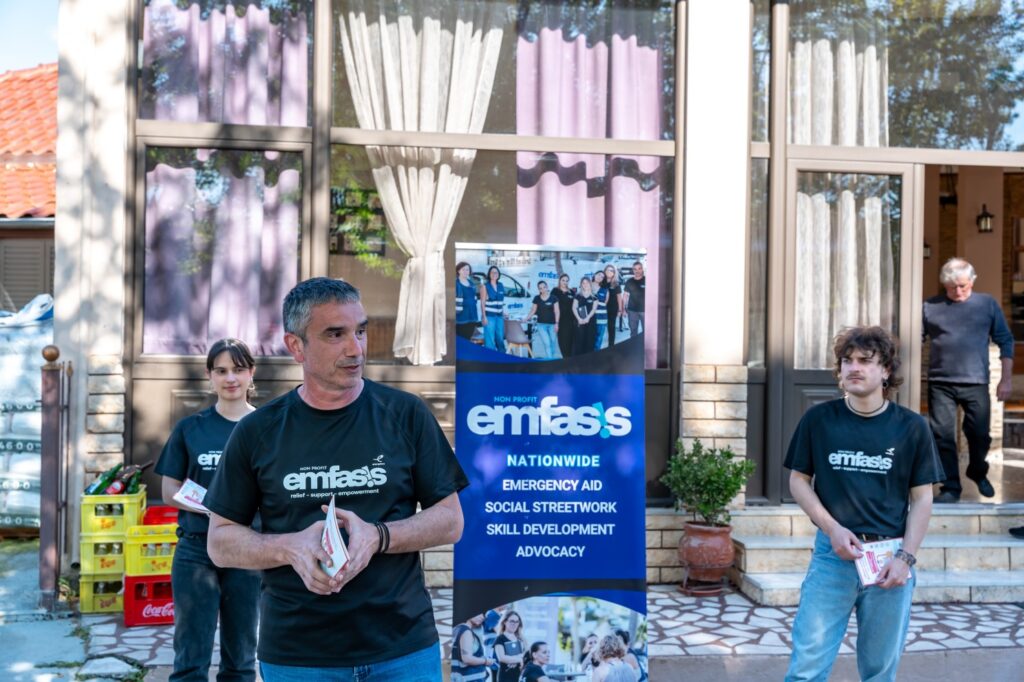
Recognizing this enormous gap in the culture of prevention and protection, civil society is taking dynamic action through initiatives that are transforming the landscape in this field. Emfasis Non-Profit, an organization with a deep, recognized track record in supporting vulnerable social groups, has developed an innovative Crisis Management Guide. This initiative was not conceived in a vacuum, nor is it a mere theoretical exercise. It was implemented with the decisive and practical support of the Reale Foundation and Ydrogios Insurance, demonstrating in practice how the private sector can make a substantial contribution to social protection through targeted Corporate Social Responsibility initiatives. However, what fundamentally sets this guide apart from other general informational brochures is its rigorous scientific and technical basis. To ensure maximum validity, the manual was developed in close collaboration with TÜV AUSTRIA HELLAS, a leading and internationally recognized accredited body in the field of crisis management and business continuity. This high-level partnership ensures that the guidelines provided are not merely theoretical advice, but rigorously certified safety protocols, realistically adapted to the daily life of the average citizen.
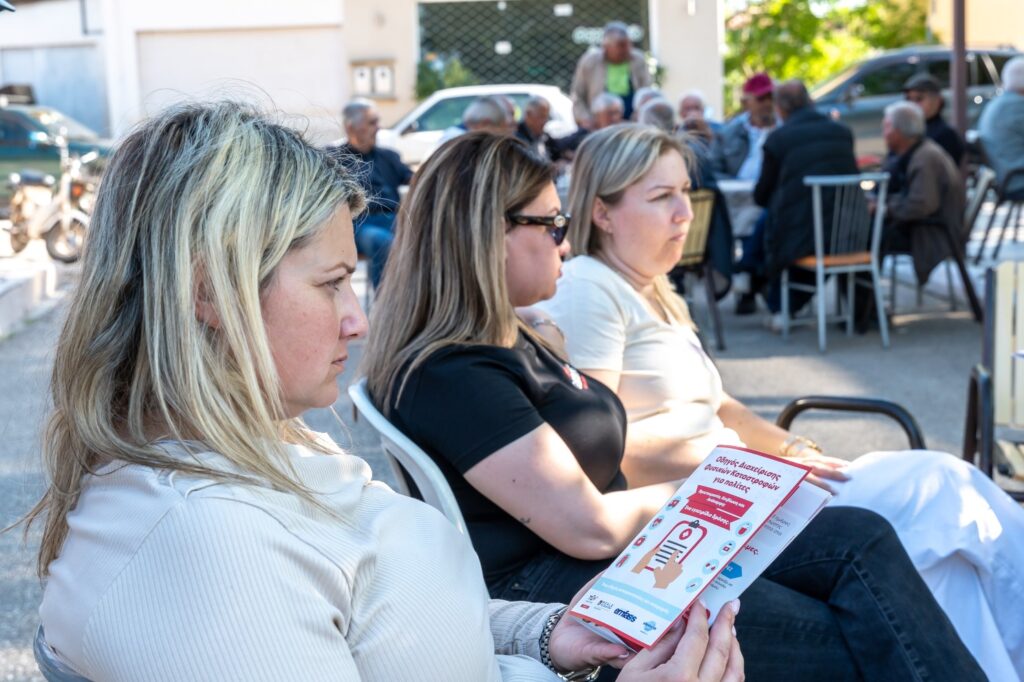
A common problem with government or non-government civil protection manuals is that they often end up in a desk drawer, without being assimilated by society. Emfasis Non-Profit is breaking new ground by transferring knowledge directly to the field. As a natural follow-up to the publication of the Guide, specialized teams from the organization conduct in-person training sessions and targeted briefings in areas that have been affected in the past or are facing a proven high risk. The goal is clear: the immediate transfer of knowledge, building what modern risk management analysts call “resilient communities.”
At the forefront of this critical effort is Iliana Georgiou, a Ph.D. candidate with deep expertise in the Climate Crisis and Governance. Her physical presence alongside local communities adds immense scientific and communicative value to the project. Iliana Georgiou does not limit herself to academic monologues; she is on the front lines, ready to answer complex questions, analyze local vulnerabilities, and discuss practical, actionable ways to strengthen local resilience. This direct engagement successfully bridges the often unbridgeable gap between high-level academic research and the immediate, day-to-day needs of citizens for protection.
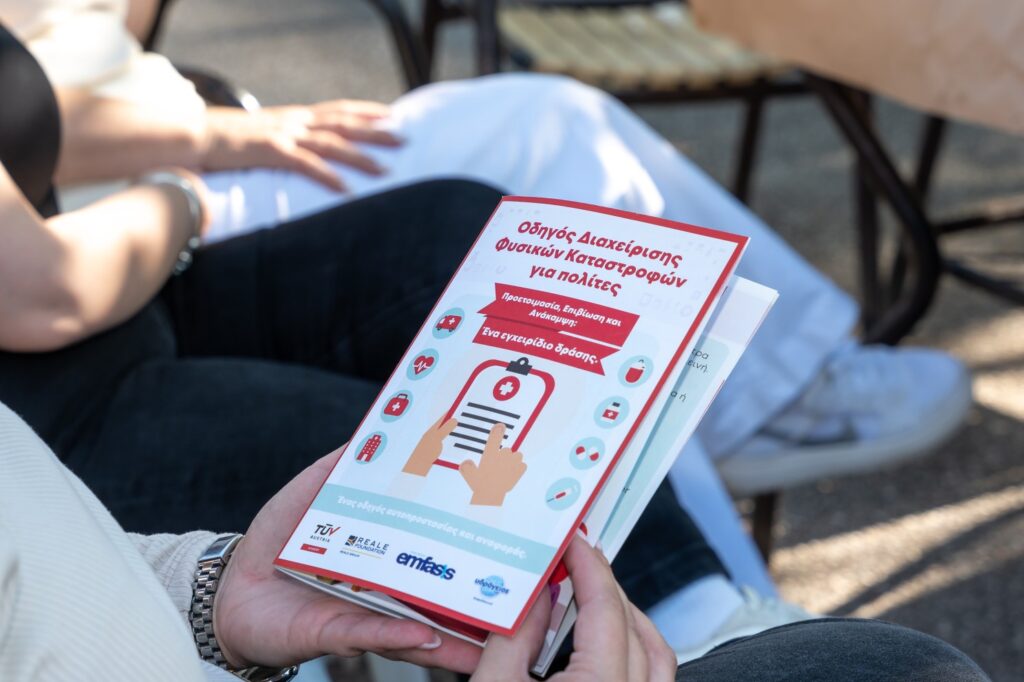
The Emfasis Non-Profit Crisis Management Guide is methodically structured around practical guidelines that cover every single stage of an emergency, providing proven tools for an immediate response. Through five key chapters, citizens are encouraged to reevaluate what they (mistakenly believe they) know about self-protection.
In the international civil protection arena, the first 72 hours following a widespread disaster are considered “the critical window.” This is the period during which major roads may be cut off, power, telecommunications, and water supply networks may be destroyed, and professional rescue workers may be unable to reach every individual incident. The Guide provides a scientifically accurate analysis of how to put together a personal “Emergency Kit” (Go-Bag). According to protocols, this must be immediately accessible and include:
Greece remains consistently the most earthquake-prone country on the European continent. However, when Enceladus strikes, our human survival instinct often betrays us, driving us to run in a panic toward the nearest exit. International experience shows that this is a fatal mistake, responsible for the majority of serious injuries, mainly due to falling objects, the collapse of exterior walls, or the collapse of stairwells.
The Emfasis Non-Profit handbook emphatically brings back into the spotlight the global golden rule of three words: “Drop, Cover, Hold on.” Strict adherence to this rule—and remaining in a safe location inside the building until the shaking has completely stopped—constitutes the most fundamental line of defense for safeguarding human life.
With traumatic memories of devastating storms and uncontrolled wildfires still fresh, the third chapter debunks dangerous myths. In the case of flash floods, ignorance of the laws of nature costs lives. As experts warn, the power of water is systematically underestimated: it takes just 15 to 30 centimeters of rushing water for an adult to lose their balance and be swept away, while just 60 centimeters is enough to lift and carry away a heavy vehicle.
At the same time, regarding wildfires, the Guide explains in technical detail the vital importance of proactively creating a 10-meter firebreak around homes, especially in areas where forests and settlements meet. Thoroughly clearing away dry grass, pruning trees, and removing flammable materials can literally save a property from heat radiation long before firefighting crews even arrive on the scene.
One of the most innovative, modern, and deeply empathetic aspects of the manual is the special, extensive attention given to companion animals. The global “Golden Rule” of evacuation states explicitly and categorically: anything that is unsafe for humans is also unsafe for their pets. Leaving a pet tied up or locked inside the home is a sure recipe for disaster. The Guide introduces the concept of a special “Pet Go-Kit,” which is prepared in advance and includes dry food, bottled water, a spare leash, medical records, health records, and any medications the pet may need, placing our four-legged friends at the very heart of the family evacuation plan.

In today’s world, digital technology serves as the citizen’s invisible “guardian angel.” This handbook provides a thorough analysis of how the European Emergency Number 112 works. A significant percentage of citizens are unaware that calling 112 is entirely possible even if their cell phone has no signal from their specific carrier, even if the phone does not have a SIM card, or even if the screen is locked. The system utilizes any available cellular network in the area to transmit the emergency signal and send geolocation data to the authorities.
In addition, this chapter provides critical guidelines for digitally organizing the medical history of vulnerable family members (medications, critical allergies, chronic conditions), so that this information is immediately and clearly available to emergency responders and paramedics, saving precious seconds.
Against the backdrop of the intensifying climate crisis, natural disasters can no longer be accurately predicted, nor, of course, completely prevented. These events are becoming statistically more frequent, more unpredictable, and dramatically more severe. Fatalism, however, is not a social choice.
Enter your email to be the first to hear our news!





.avif)
.png)
